
Used Diesel Truck Edmonton: Diesel vs. Gas for Towing
Key Takeaways
- Edmonton used diesel trucks provide robust low-end torque, steady heavy-grade towing, and exhaust braking that enhances safe handling of big trailers. Match towing capacity, axle ratio, and real trailer weight carefully to stay safe and legal.
- Turbo diesels squeeze more fuel economy under load than gas engines, particularly for long-distance towing. Follow real liters per 100 kilometers and calculate annual fuel costs according to your real tow frequency and trailer weights.
- ‘True ownership costs’ extend past the point of purchase and cover fuel, routine maintenance, repairs, and depreciation over a period of at least 5 years. Diesel versus gas trucks with local fuel prices, expected maintenance, and Alberta winter requirements, such as block heaters and winter tires.
- A do-not-buy-without a complete pre-purchase check that includes full service history and mechanical health, emissions integrity, and real payload ratings right from the door jamb or window sticker. Make sure emissions systems are intact and that the truck’s real-world configuration can safely pull your desired trailer and load.
- Winter readiness is essential in Edmonton with dependable cold starts, fuel gelling protection, and DEF system operation. Scan for block heaters, winter-grade diesel, anti-gel additives, and tested remote start systems to keep your truck reliable in subzero weather.
- Flexible Financing When available in Edmonton, flexible financing options can help buyers get into a diesel crew cab 4x4 that fits their work demands and budget. Think trade-in value, down payment help, and payment plans. More importantly, focus on mechanical condition, not cosmetics.
Used diesel truck Edmonton refers to residents of or near Edmonton seeking a secondhand diesel-powered pickup or work truck — usually for towing, hauling or workday usage. Lots of local buyers are brand-conscious, settling on Ford, Ram, Chevy and GMC, plus the models with beefier frames and tow ratings. Typical requirements are snow-worthy, efficient fuel usage on long highway jaunts, and sufficient towing power. Shoppers scrutinize previous service records, engine hours, and the spiderweb of rust from road salt. To help sort all that out, the remainder of this guide walks through important specs, local market trends, and simple checks pre-purchase.
Compare Towing Performance
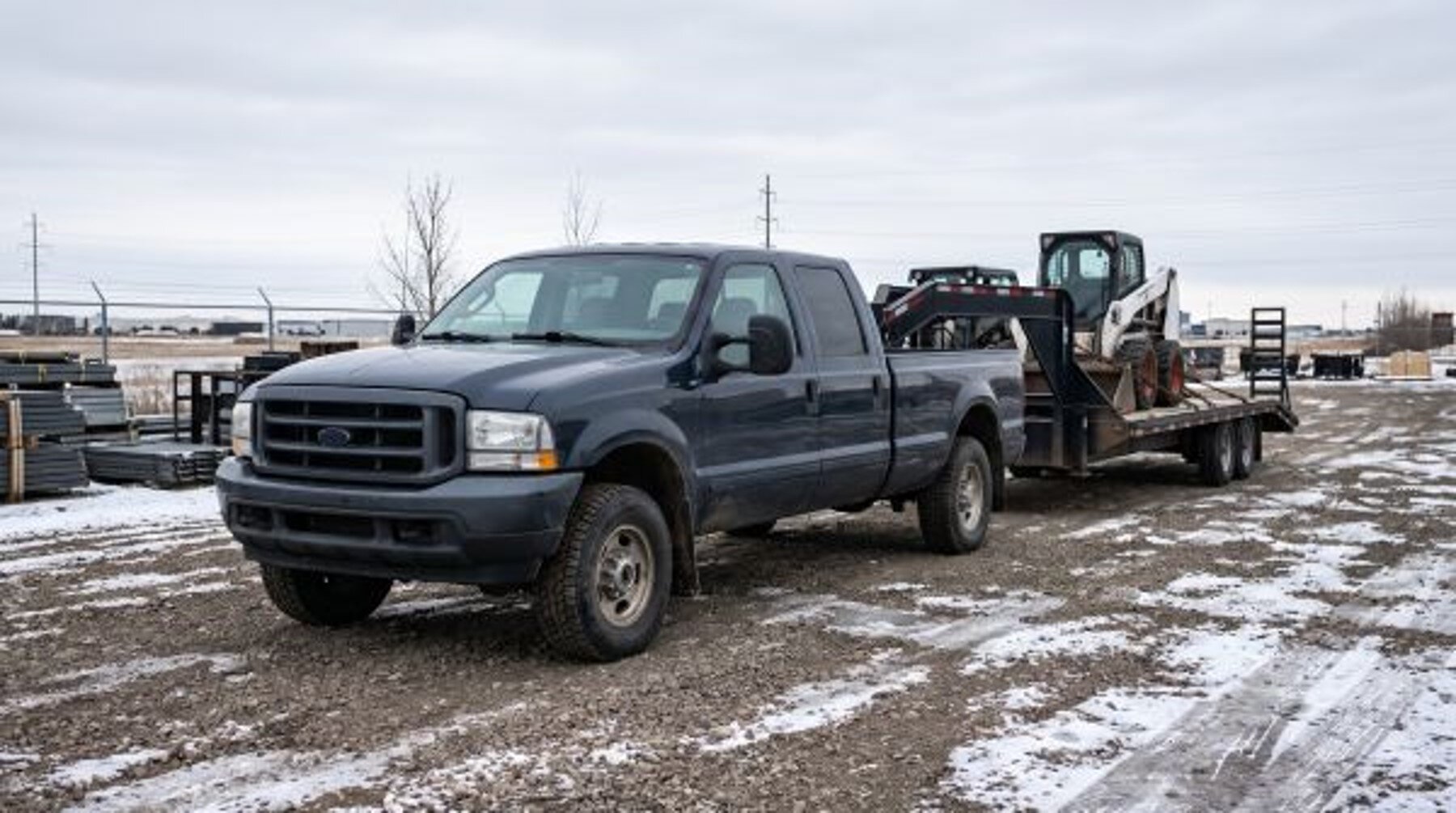
Used diesel trucks in Edmonton are great for towing thanks to their high low-end torque, rugged drivetrains and greater fuel efficiency under load. Towing isn’t just about engine size, either. You have to dive into torque curves, transmission design, axle ratio, suspension and braking systems, then compare that to the weight of your trailer and the routes you’ll be driving throughout Alberta and Western Canada.
1. Low-End Torque
Turbo diesel engines build peak torque at low RPM, which helps when you pull a loaded equipment trailer out of a job site or start a 5,000 to 7,000 kg gooseneck on a grade. A 6.7 L Cummins turbo diesel, for example, can deliver massive torque well below 2,000 RPM, while a similar gas V8 often needs much higher revs to reach its peak pull. That low-end surge cuts clutch slip or torque converter strain and makes starts more controlled on gravel, ice, or wet pavement.
A lot of 6-cyl diesels outpull gas options when a trailer is attached, even if their maximum horsepower matches on paper. With a loaded tandem-axle camper or stock trailer in tow, however, diesels generally feel more stable and require fewer gear shifts to maintain highway speed. It’s why diesel crew cab 4x4 pickups are so sought after for farm, oilfield, and construction work around Alberta.
Torque delivery is even more important with gooseneck, tandem axle, and tridem trailers that hike combined weights beyond 9,000 to 11,000 kg. Buyers who tow this kind of load weekly tend to choose diesel for both the towing strength and longevity. A well-maintained engine can run for several hundred thousand miles. The compromise is increased cost and slightly more frequent fuel filter changes, about every 25,000 to 40,000 km, which ought to be factored into the operating budget.
2. Heavy Grades
On long Alberta grades, diesel trucks tend to maintain speed with less effort, as they maintain strong torque across a wide RPM range. That assists a Ram 2500 Big Horn or Ford XLT diesel in remaining in high gear while pulling up long hills with a loaded trailer, saving engine roar and fuel. Sustained torque cooperates with engine braking to enhance control on the return down, so the driver does not ride the service brakes and risk fade or overheating.
Shopping used, it pays to put a premium on trucks with upgraded suspension and superior shocks if you hammer rough secondary roads or job sites. Heavier rear leaf packs, helper springs and upgraded dampers all help keep the truck level and stable when the trailer shifts weight over dips, frost heaves or gravel ruts.
3. Exhaust Braking
Exhaust brakes employ the turbo diesel’s engine to slow the truck, reducing strain on the brake pads and rotors as you cruise downhill with 4,500 to 6,800 kg in tow. This might be an important safety attribute on mountainous courses or when you tow regularly in country settings with minimal run-off room. Less brake heat translates to less rotor warps and longer pad life over the truck’s lifespan.
Some trims come with this from the factory, like Ram 3500 Limited 4x4 Crew Cab models with a Cummins 6.7 L and integrated exhaust brake. On any used diesel truck, it helps to find the original window sticker or build sheet and confirm both the exhaust brake and the integrated trailer brake controller were factory installed, not added later with uncertain wiring quality. For regular towing in mountainous corridors or uneven rural routes, picking a truck with a known, well tested exhaust brake system adds another layer of safety margin.
4. Transmission Stress
Automatic transmissions behind diesels such as heavy 6-speed autos or multi-gear units are typically constructed with more robust internals to handle the high torque and sustained towing. A lot of Ram 3500 Big Horn or other like 4x4 Crew Cab configurations are rated for some seriously heavy trailer weights since the torque converter, clutches, and cooling systems are sized for that labor. If engine output and transmission strength aren’t well matched or a prior owner modified the engine without upgrades, the unit can experience early wear and expensive breakdowns.
Service records are crucial on older used pickups. Compare towing performance. Buy: Examine invoices for prior transmission work, fluid changes, or overheating, like repeated seal replacements. For hard towing, you’ll want to target trucks that left the factory with heavy-duty cooling or a transmission prep package, as these tend to have beefier coolers, lines, and software tuning. Block heaters in cold Edmonton winters assist, as faster warm-up is easier on both the engine and the transmission when you first begin driving under load.
5. Fuel Efficiency
Under stable towing, diesels typically consume fewer liters per 100 km than gas engines of comparable rated power. This gap increases as trailer weight and distance increase, which is why so many long-distance haulers choose diesel despite initial truck price being $5,500 to $11,000 CAD more. Turbo diesels typically maintain their fuel advantage on both highway and mixed drives hauling enclosed cargo boxes or flatbeds. City-only winter driving is not great for many diesel setups and can plague diesel particulate filters if the engine doesn’t often access full temperature.
Tracking real-world use helps. Owners can log fuel consumption for city and highway towing near Edmonton to see how their stats stack up against rated values. In time, the superior fuel economy and solid resale value of diesel trucks can balance out the higher sticker price and additional servicing, provided you intend to tow frequently and for longer distances.
| Drivetrain Type | Engine Example | Power (hp) | Torque (Nm) | Max Tow (kg) | Payload (kg) |
|---|---|---|---|---|---|
| Diesel | 6.7 L Cummins turbo diesel | 370 | 1 050 | 9 000+ | 1 500+ |
| Gas | 6.4 L gas V8 | 410 | 650 | Approximately 6,800 to 7,500 | Approximately 1,400 to 1,600 |
For a more informed comparison, use published fuel consumption ratings as a starting point, then compare them with actual fuel records from similar trucks used for towing. Remember that real-world consumption changes with trailer weight, driving conditions, and vehicle configuration.
True Ownership Expenses
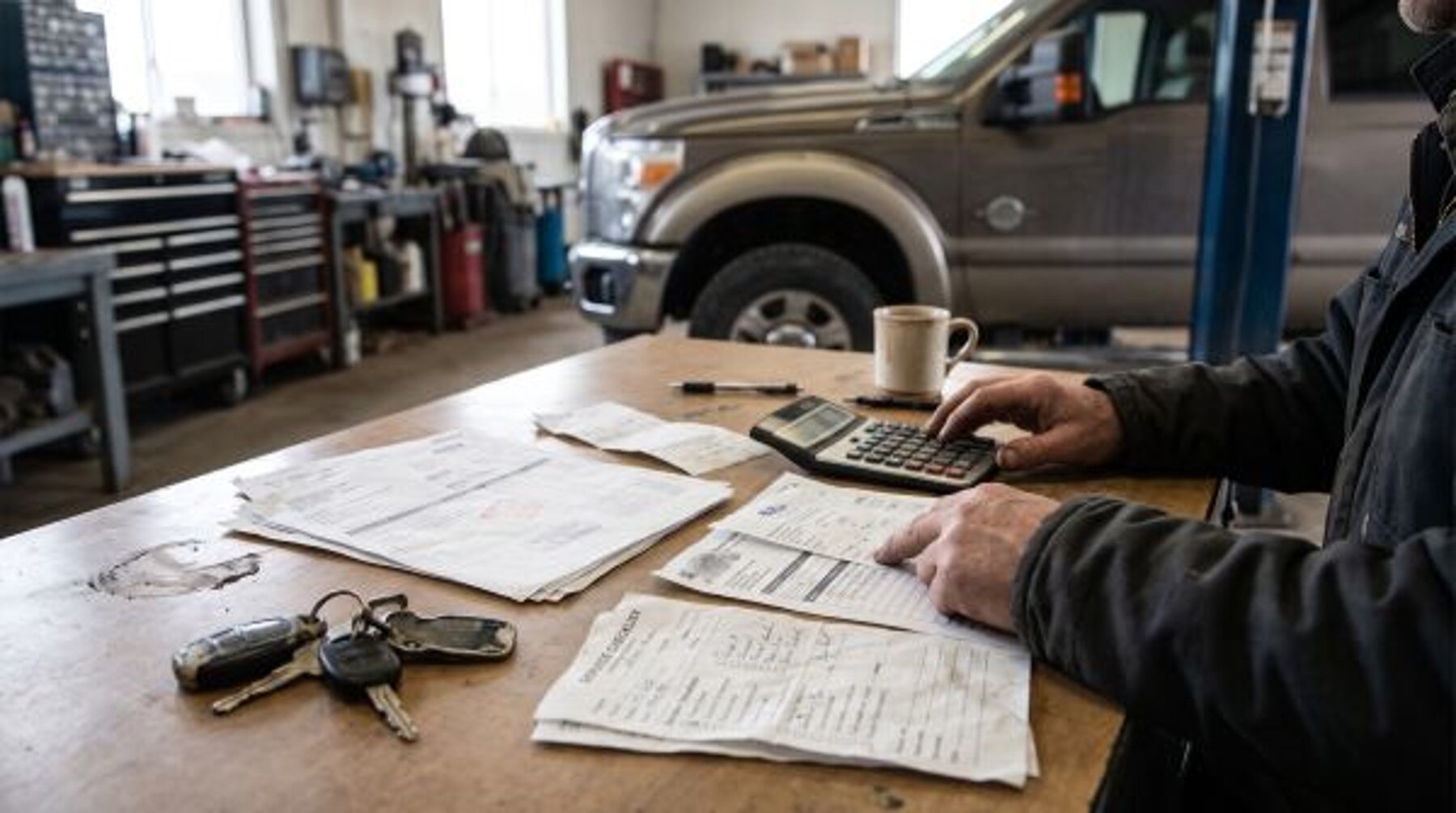
True ownership costs extend far beyond the sticker price. For a used diesel truck in Edmonton, you have to balance purchase price, fuel, upkeep, repairs, insurance and long-term depreciation over at least five years and compare that to how hard and how far you drive.
Acquisition Price
Used diesel trucks nearly always fetch a premium over gas equivalents of the same model year, trim level, and miles. The diesel premium typically lands in the range of CAD 5,500 to 11,000 for heavy-duty models like Ram 3500, Ford Super Duty, and Silverado HD, largely due to the engines’ longevity and towing capacity.
Shipping and options count for resale and real ownership expenses. Packages such as a Ram 3500 Big Horn, Ford XLT Premium, or Silverado LTZ 4x4, crew cab, towing mirrors, integrated brake controller, and heated seats generally hold value better, but drive the purchase price higher. A clean Carfax, no auction history, and solid service records can contribute more than a baseline discount off a truck that has gaps or previous commercial use.
Dealership incentives in Edmonton, like work truck trade-in bonuses, finance rate buy downs, or pricing on off lease units, often push that bottom line figure more than buyers think. Build a short must-have list before you shop: for many local owners that means 4x4, block heater, winter-rated tires, remote start, and basic tech like a backup camera, while items like leather, built-in navigation, or sunroof can move to a “nice-to-have” list if you need to keep monthly payments flat.
Fuel Costs
Fuel is one area where a diesel truck can make up for its higher purchase price. Diesel fuel generally costs more per litre than gasoline in and around Edmonton, although a 3.0 L to 6.7 L diesel truck typically consumes less fuel than a comparable gas truck, particularly when towing. For someone driving approximately 30,000 kilometres annually, with 30% of that distance spent towing, potential five-year fuel savings could reach CAD $11,000 to $16,500, or approximately CAD $2,200 to $3,300 per year. At 20,000 kilometres per year or less, annual savings may be closer to CAD $1,100 to $1,900. Once additional maintenance and repair expenses are included, however, the diesel may no longer offer an overall cost advantage.
Range is another consideration if you regularly travel through northern Alberta or to remote work camps where fuel stations are less frequent. A diesel truck with a 100- to 130-litre fuel tank can provide a useful driving range, potentially reducing the need for unplanned fuel stops. Use the truck's trip computer or infotainment system to monitor real-world fuel consumption in litres per 100 kilometres over several months. This information provides a more practical basis for estimating five-year fuel expenses than relying exclusively on factory ratings, especially if you frequently tow heavy loads or idle in cold weather.
Routine Upkeep
Diesel trucks share many of the same maintenance requirements as gas trucks, but the work is often more involved and the bills can be higher. Diesel maintenance can cost 60% to 80% more over the life of the truck because of larger oil capacities, higher-priced filters, and the requirement for diesel exhaust fluid (DEF). A diesel oil change typically costs CAD $165 to $245, while a comparable gas truck might be closer to CAD $95 to $150. Fuel filter changes are another diesel-specific expense; many need replacement every 24,000 to 32,000 kilometers (15,000 to 20,000 miles), at approximately CAD $100 to $170 per service.
Common diesel maintenance tasks include:
- Engine oil and filter changes
- Primary and secondary fuel filter replacements
- DEF top-ups and system checks
- Air filter and cabin filter checks
- Coolant and transmission fluid service
- Block heater and battery inspections before winter
DEF use presents an ongoing operating expense. Many late-model diesel trucks consume approximately 1 liter of DEF per 300 to 400 kilometers. At around CAD $8 to $14 per liter, driving 25,000 kilometers annually could result in approximately CAD $500 to $1,200 in DEF costs alone. Factor in winter tires, block heaters, low-temperature diesel-rated oil, and winter-grade diesel fuel to keep the truck dependable during Alberta's cold winters. Preventative work before peak towing season, including a full inspection, fresh fluids, and filter changes, can reduce the risk of costly downtime and mid-season breakdowns.
Preventive servicing is especially important for diesel trucks used regularly for towing, hauling, and commercial work. A consistent fleet maintenance program can help track service intervals, identify developing mechanical issues, and reduce unexpected downtime.
Repair Budgets
Diesel trucks are durable, but when something goes wrong, repairs can be expensive. True ownership expenses include high-pressure injectors, turbochargers, and emissions components that can cost considerably more to repair than comparable gas-engine parts. Many also require specialized diagnostic equipment and an experienced diesel technician. It is smart to reserve a repair fund for drivetrain components such as automatic transmissions, transfer cases, and axle seals, as well as electronic systems such as trailer brake controllers, cameras, and advanced driver assistance systems (ADAS). Insurance premiums can also be higher because of increased vehicle values and potential repair costs.
Typical high-mileage repairs may include
- Ram 3500: Injectors, high-pressure fuel pump, front suspension, and exhaust manifold bolts.
- Ford Super Duty: Turbochargers, EGR coolers, emissions sensors, and automatic transmission rebuilds.
- Silverado HD: DEF heaters, NOx sensors, glow plugs, and rust-related brake and line repairs.
Building a five-year ownership budget that includes purchase price, insurance, fuel, planned maintenance, and a realistic repair allowance based on Edmonton trucks with similar age and mileage provides a much clearer picture of long-term costs than focusing only on the monthly payment.
Because diesel repairs can involve specialized components and diagnostic work, buyers should account for replacement parts and qualified repair support when estimating long-term ownership expenses. Reviewing available parts and service options can help you plan for ongoing maintenance and unexpected repairs
Critical Pre-Purchase Verification
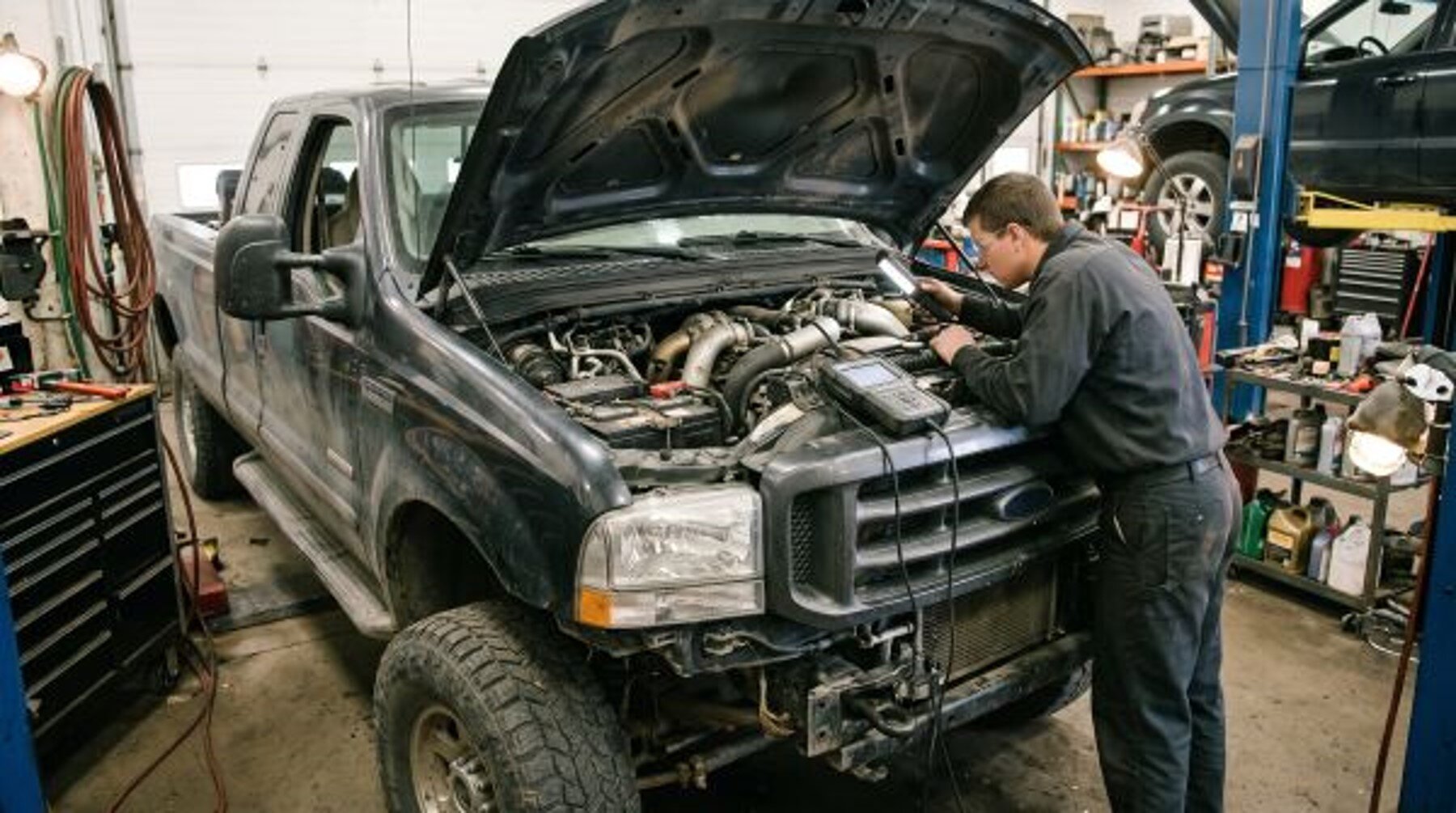
Buying a used diesel truck in Edmonton is about verifying more than price and mileage. It’s about confirming actual mechanical condition, verifying precise payload information, and clean history prior to exchanging funds. A good pre-purchase inspection can easily run two to four hours and provides a real-time picture of the truck’s mechanical condition, not just what the paperwork says.
Service History
Request detailed, dated service history for oil changes, fuel filters, transmission service, cooling system work, and DEF system care. For most contemporary diesels, oil changes every 8,000 to 12,000 kilometers and consistent fuel filter replacements are fundamental evidence of conscientious ownership, particularly during Alberta’s icy winters.
A clean Carfax (or similar report) with regular dealer or specialist diesel shop maintenance decreases the chances of concealed issues. That record should match up with the odometer and engine hours. A low kilometer truck with very high hours may have idled on job sites, which is hard on emissions parts.
Confirm all recalls and technical service bulletins are complete, especially for high-pressure fuel pumps, glow plugs, and emission updates. Create a checklist for the specific engine and transmission, such as Duramax, Power Stroke, Cummins, or others, using the maker’s schedule so you can see at a glance which key services are done and which will hit your budget next.
Mechanical Health
Have an independent diesel technician perform a comprehensive mechanical inspection, not a quick visual once-over. That ought to encompass engine compression where feasible, turbo lag, cold and hot starts, and smooth shifts under load. A 24-hour oil analysis report can be worth the price on more valuable trucks since it can flag bearing wear, coolant in oil, or fuel dilution.
Scan for fault codes and check all warning lights. Then inspect for fluid leaks around the engine, transmission, differentials, and transfer case. Check brakes and steering components closely, as crucial pre-purchase verification always includes immediate safety items like failing pads, warped rotors, or loose steering joints.
Check underneath for frame rust, bent crossmembers, and cargo box damage that indicates heavy loads or rough collisions. Suspension, shocks, and bushings deserve extra scrutiny if the truck pulled big trailers around. Inside the cab, check climate control, seat heaters, power windows, 4×4 selector, and infotainment. Electronic quirks can indicate previous water damage or shoddy repairs.
It’s crucial to verify the odometer with engine and transmission hour data. In Edmonton work trucks, a mismatch, say modest kilometers with extreme hours, can indicate excessive idling, which accelerates engine and emissions wear.
Emission Integrity
Modern diesel emissions systems are a popular failure and are costly to correct. Ensure the DPF, EGR, and SCR/DEF are present, properly mounted, and show no conspicuous indication that they have been tampered with.
Check for dash warnings related to emissions, like DPF full or DEF system fault, and perform a diagnostic scan during the test drive. DEF fluid level is good, there is no stink of ammonia in the cab, and there are no endless countdown-to-no-start messages. Because you’re in Alberta and under Canadian regulations, verify the truck still complies with the emissions norms for its model year. A deleted or tweaked system can lead to fines and even fail DOT inspections if you operate the truck commercially.
Real Payload
Real payload begins with factory data. Verify the door jamb sticker and original window sticker for GVWR, GCWR, and maximum payload and tow ratings for that specific cab, bed, axle ratio, and drivetrain. This can be important in Edmonton where trucks frequently tow enclosed trailers or transport hefty cargo over significant distances.
Match those figures against how you’ll be using the truck. Deduct the weight of any additional equipment, such as toolboxes, winches, flat decks, snowplows, passengers, and fuel to find what payload actually remains. This check isn’t just about safety; it impacts your truck’s ride on uneven roads and how frequently you may be overloading it.
Match your requirements, such as a 3,000 kg fifth-wheel trailer and gear, with actual, not claimed, capacity. If you do commercial work, you need to be sure the truck can pass local DOT inspections when loaded.
If the truck will be used commercially, confirm that it meets the applicable inspection and roadworthiness requirements for its class and use. Review Alberta’s commercial vehicle inspection requirements before putting the vehicle into commercial service.
Approximate maximum payloads (may vary by year/trim):
| Model | Typical class | Approx. max payload (kg) |
|---|---|---|
| Ram 2500 | ¾-ton | 1 000–1 400 |
| Ram 3500 | 1-ton | 1 500–3 200 |
| Ford F-250 | ¾-ton | 900–1 400 |
| Ford F-350 SRW | 1-ton SRW | 1 300–2 300 |
| Ford F-350 DRW | 1-ton DRW | 2 500–3 500 |
Manage Winter Operating Conditions
Winter in and around Edmonton is no joke when it comes to driving used diesel trucks, so buyers should consider cold-weather features and maintenance as closely as engine hours or mileage. A good winter setup is less about comfort and more about whether the truck cranks, moves, and protects critical driveline components once temperatures plummet well below 0°C.
Cold Starts
Cold starts determine if the truck even runs on a winter morning. A functioning block heater is nearly non-negotiable in this weather. Be certain the cord is intact, the plug is not cracked and that you have access to a 120 V outlet where the truck will be parked overnight. If you park on the street or at a job, consider heavy-duty outdoor extension cords made for low-temperature use.
Something you need to test is remote start and push-button start in real cold if possible or at least after the truck has sat a few hours. Make sure that glow plug and wait-to-start lights act like the owner’s manual says they should and that the engine starts without excessive cranking. Good glow plugs and a healthy battery with strong cold-cranking amps and clean terminals reduce hard starts and starter wear.
Operational tip: Winterize with winter-grade diesel and if necessary, sub-zero rated fuel additives to assist ignition quality and reduce dry starts. A brief warmup is helpful. Let the engine run for a short time, then pull away with smooth, light throttle instead of long idling.
Consult the manual for cold-weather steps specific to that engine, such as limits on idle time, preferred oil viscosity, or block-heater use.
Fuel Gelling
Diesel can gel in severe cold, choking off fuel flow. If you’re dealing with Edmonton-grade winters, run winterized diesel blends and add an anti-gel additive prior to cold snaps, particularly if the truck is parked outdoors for long stretches.
By keeping the tank at least half to full, you reduce condensation and help slow gelling. For trucks at remote sites or night shifts, a heated fuel filter or fuel-line heater provides added protection. Look for symptoms such as power loss, rough idle, or stalling under load. Treat those as canaries, not inconsequential nuisances. Industry winter best practice involves fuel-system checks pre-season, along with ensuring any recommended additives are approved by the engine manufacturer.
DEF Frosting
The DEF system is at cold-weather risk, as DEF can freeze. A lot of the newer diesel trucks have DEF tank heaters from the factory, but it’s worth verifying the feature is there and functional. If you park in a heated garage or at least a protected location, it decreases your probability of frozen lines and start-up errors.
Inspect DEF levels regularly during winter and refill ahead of any extended trips or predicted cold spells. Run quality DEF that meets the right standards so the system remains clean.
Monitor your dashboard for DEF or emissions warnings and address them promptly, as certain trucks enter reduced-power or “limp” mode if DEF faults persist. In very low temperatures, pair this with a wider winter plan: winter tires, dual zone automatic climate control, heated seats and wheel, rear-seat heat for passengers, working block heater, synthetic oils that stay less thick in cold, and driveline fluids that meet OEM and SAE J306 low-temperature specs. Consider a snow-plow prep package, cargo box lights, and power running boards where needed.
Used Diesel Truck Edmonton Realities
Used diesel truck Edmonton – Sure, they’re work tools first and status pieces second. The market does, too. Crew cab 4x4 pickups and heavy-duty units are in demand because a lot of our buyers have to tow, haul or drive long distances through the cold. Ford F-450, Ram 5500s and International 7300s pop up a lot, as well as the usual 2500 and 3500s. That consistent demand holds prices strong, even for older units with obvious wear.
Diesel trucks remain a favorite around here for their torque and longevity. Engines like the 6.7 L Powerstroke, 6.6 L Duramax, and 7.6 L L6 diesel are designed to haul heavy payloads, frequently on extended highway stretches. A contractor towing a trailer of tools or a driver transporting equipment to remote job sites might select a ten-year-old diesel over a brand new light-duty gas truck. After all, used units are often less expensive than brand new trucks and still manage the same workload, which means they can be economical if they were serviced on time.
Mileage is the reality. Most of the used diesel trucks for sale in Edmonton have day-to-day grind, wintertime dashes and constant haulage on their odometers. Mileage by itself is not a deal breaker, but it does increase the necessity for evidence of routine oil and fuel filter change as well as proper transmission service. A high-kilometer truck with a full service history can be a better option than a low-km truck with no records. Buyers should expect to budget for additional expenses, like injector replacement or emissions system repairs, which can alter the actual cost of a “cheap” truck.
Comfort and feature sets still do. Four-wheel drive, automatic transmission, and air conditioning are kinda the baseline now even on work trucks. Luxury accents such as leather seats, heated steering wheels, panoramic sunroofs, and branded audio systems increase resale values, particularly on crew cab 4x4 models. It’s smarter to select a truck with a healthy drivetrain and clean inspection report than one with aftermarket wheels, lift kits, or flashy lighting but mystery maintenance.
| Configuration | Typical Market Behavior |
|---|---|
| Crew cab 4x4, basic interior | High demand, steady prices |
| Crew cab 4x4, premium interior | Strong demand, noticeably higher resale value |
| Regular cab 4x2, work trim | Lower demand, more price flexibility |
| Heavy-duty chassis cab (e.g., 5500) | Niche demand, price tied to service records |
Secure Flexible Vehicle Financing

Insta Auto Solutions can help if you're looking for a used diesel truck in Edmonton and need a payment schedule that accommodates your real-world cash flow. The focus is simple: match the right truck and financing plan to the way you drive and use the vehicle, rather than choosing a truck based on monthly payments alone.
Financing options are available for buyers with established credit as well as those working to rebuild their credit after previous financial challenges. Loan terms can be adjusted to help arrive at a monthly payment that fits your budget. A trade-in may also reduce the amount you need to finance, while a larger down payment can lower the principal and potentially reduce the interest paid over the loan term. These options can help manage the diesel price premium, which can add approximately CAD $5,500 to $11,000 compared with a similar gas truck of the same year, mileage, and trim level.
Transparent pricing matters before you sign. A diesel truck does not necessarily cost more per month to own when fuel savings are considered, particularly for buyers who tow frequently or travel long distances. If you regularly tow equipment, haul a camper, or drive more than 25,000 to 30,000 kilometers annually, improved fuel efficiency under load may help offset the higher purchase price. However, diesel trucks generally have higher maintenance expenses. Depending on the vehicle and usage, annual maintenance could cost approximately CAD $700 to $1,400 more than a comparable gas truck.
For drivers who travel closer to 15,000 kilometers annually, primarily in the city, fuel savings may be much smaller. Over the ownership period, those savings might not be enough to offset the diesel price premium and additional servicing costs. That is why it is important to compare the total cost of ownership rather than focusing only on fuel economy or monthly payments.
Insta Auto Solutions encourages buyers to submit an online financing application or visit the dealership to review actual numbers. The team can help compare payment plans for diesel and gas trucks, discuss expected fuel consumption and maintenance expenses, and consider resale value in the Edmonton market. From there, you can explore available diesel inventory, look for trucks that meet your towing and payload requirements, and arrange a test drive or financing discussion.
Conclusion
A used diesel truck in Edmonton could make sense if the numbers work and the truck matches your actual needs. Towing muscle, efficiency, and cold start knowledge all matter. So do repair bills, loan terms, and block heater use once winter hits hard. Consider obvious use cases. A three-horse trailer. An extended snow haul to a work site. A fifth-wheel up the road. Link each selection to an actual activity, not assumption or ego. Get your budget in order, check trucks in person, request full service histories, and bring a trusted tech to run a full scan and test drive before you sign anything.
Frequently Asked Questions
How do I compare towing performance when buying a used diesel truck in Edmonton?
Think engine size, torque rating, transmission type, and factory tow package. Look at the manufacturer's tow rating and compare it to your trailer weight. Request service history on the drivetrain to verify it has managed towing without overheating or extensive fixes.
What ownership costs should I expect with a used diesel truck in Edmonton
Calculate your price to be a higher purchase price and insurance, but possibly better fuel economy on long hauls. Plan for diesel-specific maintenance, winter fuel additives and potential emission-system repairs. More importantly, ask a trusted diesel mechanic for some realistic yearly cost estimates before you buy
What should I verify before purchasing a used diesel truck in Edmonton
Always ask for a complete vehicle history report, service records and inspection documentation. Have a pre-purchase inspection done by a diesel specialist. Check kilometers, accident history, rust on frame and condition of turbo, injectors and emission components to prevent surprise repair invoices
How do Edmonton winters affect used diesel truck ownership
Cold temps make starting tougher, thicken fluids, and put more stress on batteries and glow plugs. Make sure the truck has a block heater, a good battery, proper winter-rated oil, and no fuel system issues. Schedule some winter upkeep and good winter tires
Are used diesel trucks reliable in Edmonton for towing and work use?
They can be really dependable if properly cared for. Search for ones with solid service records, minimal modifications and no abusive towing. A specialized inspection of the engine, transmission and frame is the key to long-term reliability in our local conditions
How can I find flexible financing for a used diesel truck in Edmonton
Shop rates at banks, credit unions, and trusted dealers. Look at interest rate, term length, and overall cost, not just the monthly payment. Pre-approval can put you in a better negotiating position and keep you grounded in what you can actually afford to pay and maintain
Is buying a used diesel truck in Edmonton better than buying new
A used diesel truck costs less upfront and sidesteps that early depreciation. New trucks have the newest technology and complete warranties. Weigh your towing requirements, budget, and duration you plan to keep the truck. A good used diesel can be a good value option.




Fast Approval Process

1. Apply For Your Loan
Online application only takes minutes to complete. We only ask for information we require.

2.Get Approved
Your insta auto loan is processed fast with same day approvals.

3.Go For Spin
Take your car out for a drive.
Schedule Test Drive
Let's Get Started
Search Inventory
Find that perfect car, truck, crossover, suv, or minivan and have all of your car loan options made easy.
Calculate Loan
Estimate your monthly payment quick and easy with our loan calculator. That way, you’re ready to go when you get to the dealership!
Pre-Approval
Our dealer network offers low interest rates for car loan shoppers and we can often have your application accepted in minutes.
St Albert Location
Address: 4 Riel Dr Building A, St. Albert, AB T8N 3Z7
Phone: 1-780-590-0121
Mon to Fri - 9AM to 7PM
Sat - 10AM to 4PM
Sun - Closed
Edmonton Location
Address: 13055 149 St, Edmonton, AB T5L 2J7
Phone: 1-587-442-4160
Mon to Fri - 9AM to 7PM
Sat - 10AM to 4PM
Sun - Closed
Acheson Location
Address: 11327 269 St, Acheson, AB T7X 5A3
Phone: 1-587-442-4188
Mon to Fri - 9AM to 7PM
Sat - 9AM to 4PM
Sun - Closed
Spruce Grove Location
Address: 131 1 Ave E #101, Spruce Grove, Alberta, T7X 2Z8
Phone: 1-780-670-8984 ext.208
Mon to Fri - 9AM to 7PM
Sat - 9AM to 4PM
Sun - Closed
